
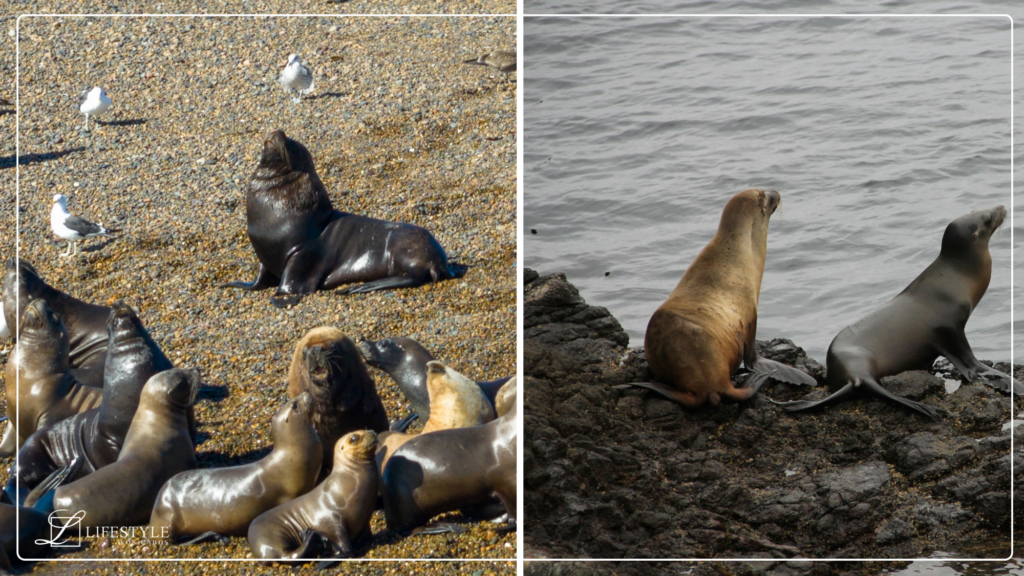
The Connection of Sea Lions.
How is it possible that marine mammals are connected across so many kilometers? While there are many species of sea lions, and we might think there’s no relationship between them due to the enormous distances that separate them, the reality is that their connection stems from the marvelous harmony with which nature organizes life to maintain the planet’s balance.
We can make numerous comparisons between the different species of sea lions, but today we’ll focus on two that inhabit opposite ends of the same continent. Beyond their differences, they represent the same truth: we are profoundly fortunate to share the oceans with them. Understanding their role allows us to appreciate not only their ecological importance but also our responsibility to protect them, avoiding harassment and caring for the environments where they live, which hundreds of other species also depend on. The South Atlantic Ocean and the Sea of Cortez differ primarily in water temperature. This condition determines that we find different species, both in their body composition and behavior, adapted to their respective environments.
Let’s begin with the sea lion that inhabits the coasts of the Sea of Cortez and the Pacific Ocean. According to data from official agencies such as CONAP and SEMARNAT, the California sea lion (Zalophus californianus californianus) is characterized by its slender neck, prominent external ears, long forelimbs, and hairless flippers. Its hind flippers are relatively short and have fur on their dorsal surface. Adult males have dark brown fur, while females have lighter shades. In the water, both can vary in color from dark chocolate to gray. Pups are born with dark brown fur, slightly lighter than that of juveniles.
These animals can reach up to 380 kg in males and measure approximately 2.2 meters in length, while females are considerably smaller, weigh
ing about half as much. It is one of the most abundant pinniped species in Mexico, primarily inhabiting areas near continental shelves, bays, beaches, and ports, although they are also frequently found on islands far from the coast, such as Guadalupe Island.
At the southern tip of the continent, in the South Atlantic, we find the South American fur seal, also known as “sea bears,” a name given by early explorers for its fur. They possess a dense, fine, and silky undercoat, covered by a thicker, less dense outer coat, which allows them to adapt to colder waters.
This species of the genus Arctocephalus exhibits marked sexual dimorphism. Males have a pointed snout and develop a prominent mane on their neck, which is why they are also called “sea lions.” They can reach 2 meters in length and weigh up to 200 kg, while females rarely exceed 1.40 meters and 60 kg. Their adult coloration is grayish-brown on the back and orange-gray on the belly. At birth, the pups are black, and over time, they acquire lighter shades.
Beyond their physical and geographical differences, what is truly important is understanding the fundamental role they play within marine ecosystems. Sea lions are keystone species: they regulate fish populations and other organisms, helping maintain the balance in food chains. Their presence also indicates ocean health, as they depend on rich, well-preserved environments.
Protecting their habitats not only guarantees their survival but also preserves the stability of marine ecosystems as a whole. Pollution, overfishing, climate change, and direct human intervention can profoundly alter these environments.
For those looking to experience marine life responsibly, choosing the right accommodation is important. Cabo San Lucas vacation rentals provide an excellent opportunity to stay close to coastal environments while supporting sustainable tourism. These accommodations offer comfort, accessibility, and proximity to marine ecosystems, allowing visitors to enjoy nature responsibly.In addition, using private transportation in Cabo can enhance the travel experience by providing safe, comfortable, and efficient access to beaches and marine areas. A reliable Be -Spoke Los Cabos car service ensures smooth travel while helping reduce environmental impact when managed responsibly.
Therefore, it is essential to take immediate and concrete actions to protect these vital habitats: always respect observation distances and avoid direct interaction with sea lions. Reduce plastic use and properly manage waste so it does not pollute the sea. Support and advocate for responsible tourism practices and protect natural areas and conservation projects. Whenever possible, choose and promote sustainable fishing practices to secure food sources for sea lions and the broader ecosystem. Your commitment today directly shapes the future survival of these species and the health of our oceans.
Every little action counts. From those who live near the coasts to those who visit these environments occasionally, we are all part of this balance. Caring for the ocean is caring for sea lions, and by doing so, we are also protecting the life that depends on them.
Ultimately, although separated by thousands of kilometers, sea lions are connected by something much deeper than geography: they are part of the same living system that breathes in sync. And we, as part of that system, have a responsibility to protect it.